Showing posts with label Q/A. Show all posts

Tuesday, July 8, 2014

Making Believable Characters: Heroes and Villains

Hello, everyone!

I was looking for inspirational quotes, and I came across this quote from Stephen King. The quote was a snippet about the writing process, concerning the building of characters, which is something that challenges authors today. The challenge lies in how to build a character to the point that the lines between reality and fiction blur, making them so real that they are almost palpable.

“I try to create sympathy for my characters, then turn the monsters loose” – Stephen King.

So it made me think about heroes and villains in general. When I used to watch Disney movies, villains didn't have much of a back story. They were bad.  The main characters were the heroes who were inherently and annoyingly good. It didn't matter why. Good always battled evil and came out winning. There is something in our nature that harps back to this ancient battle of good versus evil.

Wednesday, January 29, 2014

Q/A: How Do I Write A Great Book Review?

Q: How do I write a great book review?

A: Excellent question!  There are some people that write something like "great book" and call it a day, but a good review has different elements.  A great review contains these elements.  I may miss some things that people like to post in their reviews, but here are a few tips I live by when writing reviews on Barnes and Nobles or Amazon.

I would like to mention that some people post summaries of the literary work before writing their opinion.  That can be a mistake.  In writing your summary, it can give away critical plot points.  So, in doing this, take caution.

There can always be more to add to this process of reviewing.  For short reviews, I prefer STOOW: Star Rating, Titling Your Review, Opinion of Key Characters, Opinion of Plot, and Worth Reading Value.

Sunday, June 2, 2013

Q/A: Are certain literary themes 'played out"?

Q: Are certain literary themes "played out"?

A: NO! I am a firm believer of writing what you love, regardless of the trends.

Why? Because like all trends, they come and they go. A few years ago angel books were all the rage. I read my share of handsome fallen angels, which were somehow really good at heart, that fell in love with the young protagonist. I read about three of those kinds of books when they were in style.

I read Fallen by Lauren Kate which was definitely not for me. I found all the babbling about how cute the love interest was in every chapter annoying. Plus, there were a lot of plot elements that didn't work for me. I read the Maximum Ride Series by James Patterson which I liked a lot. The first book was intriguing. By the time I got to the third book, it was less so. Lastly, I read, Indie author, Abra Ebner's Feather Trilogy. At first, I wasn't sure I was going to like novel. I was a few chapters in when I realized the first book was actually a page turner. I ended up liking it very much. Yet, before long, I was looking for something else....

The next trend was dystopian novels. While I like novels where the classic utopian society takes a downturn, I found myself looking for new novels that went against the grain. I wanted to read about witches, vampires, werewolves, and supernatural worlds. In other words, I found myself wanting to read something different from where the trend was going.

During this time, I re-read the Wicked Series by Nancy Holder which happens to be one of my favorites. It is about a battle between a family of witches and a powerful warlock. The first four books were awesome. I was not too pleased with the final book, but it was still worth reading. I read the whole Sookie Stackhouse Series, because I was a huge fan of True Blood. (Last season was horrible though). I also made a point to read, my favorite author ever, Richie Tankersley Cusick's Walk of the Spirits. It was basically about a girl who can see spirits and has to unlock the mystery of what happened to one who continues to plead for help. I liked it, but not as much as I loved her Unseen Series. I mean, I actually ordered the series before it was available in the U.S., having it shipped from the U.K. That series is about a demon who is in pursuit of a girl who it becomes obsessed with, killing everyone she is close to. Interesting, huh? I love Ms. Cusick's writing so much that I purchased all of her novels from my teenage years and read them again!

What can be learned by my reading habits? Well, as you can see, I read what I like. So, a trend can steer your writing choices, but it doesn't always translate to an instant audience. Odds are, when there so many books of one genre, a reader will be looking for a book that is different. Don't worry that the vampire or werewolf thing has been done before, because trends rotate like the earth...they always come back around.

Tuesday, April 9, 2013

Q/A: Places of Inspiration

Q: Do you use real places as inspiration?

A:
Yes, I do. If I can use real events in time, I will also do that although not as often. I do try not to name the  actual building although I will name the location and describe the building.


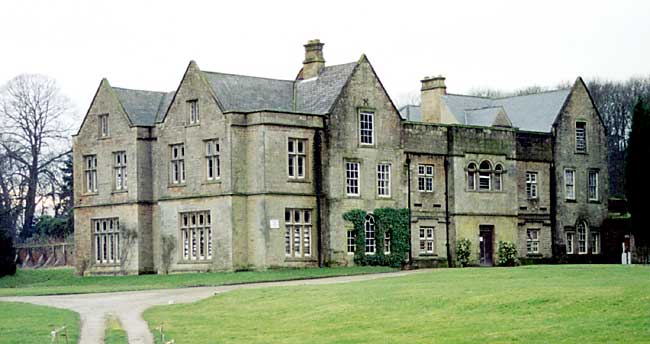
For example, my inspiration for the house in Restraint was Annesley Hall. I mentioned the town of Annesley through out the book, but never mentioned the hall itself. I developed a fascination with this manor house when I saw an episode of the show Most Haunted. Lord Byron was actually in love with a young maiden who lived in this house. However, I was fascinated by the sightings of a dark, ominous figure, the maid who hung herself in the laundry, and the belief the the house is haunted by a child who fell or was thrown from a window. At one point, this building was a school. The house was also consumed by a large fire back in the 1970's, leaving the outer shell of the derelict building you see above. I used points of this history at certain parts of my story. The child falling from the window was Marcus as Laura dangled him out. The maid was Anne. The dark, ominous figures were the vampires, and the fire opens the story. For more information on the history of Annesley Hall and its paranormal history click here.

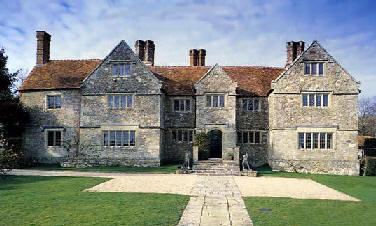
Another example is the house the Linda was held captive in Lament. The inspiration for the house in the Isle of Wight, which was guarded by hell hounds, was Arreton Manor. This is another haunted manor I spotted on Most Haunted. It is a bed and breakfast now, but it actually has a long history of being owned by English nobility, including Lord Culpeper (Thomas II) and Edward the Confessor. I was drawn by the sad story of Annabelle Leigh who witnessed her father's murder at the hands of her brother and was killed as a result. This is the inspiration behind Mason Lee's father who was accused of killing his father. The house is also know for its any ghosts of monks, a young girl (maybe Annebelle), and a woman dressed in red. As you can imagine, the ghost in the red dress was my inspiration for the cover of Linda wearing a red dress. For more information on the history and ghostly sightings click here.


The inspiration for the Carter house in Malcontent is Appuldurcombe House. Although this house looks quite majestic, it is actually a ruin. The front of the house has its windows intact, but the inside is a stone ruin. It is quite the tourist attraction, but it is its ghostly history which intrigues me. It is known for the apparitions of monks, a phantom carriage which stops at the front entrance, the ghost of a beautiful woman, sounds of children laughing, and the sound of a baby crying. Visitors to the basement have actually seen dancing shadows and ghost lights. See if you can guess what I will incorporate into the novel. For more information of Appuldurcombe's history or ghostly sightings click here.

So, real places can serve as inspiration. However when choosing a location, you don't have to be historically accurate if you are writing fiction. You can use some of the history or happenings but use them in your own way. Especially if the use of a family name is in question, because the family may still be living and you don't want to offend them. I recommend using an anagram or not naming the house but the town instead. Use your own discretion.

Happy writing and remember inspiration is everywhere. You just have to look.

Tuesday, April 2, 2013

Q/A: What Is In a Name?

Q: How do you come up for the names of your characters? Is there a special meaning behind them?

A:
Yes. This is actually not uncommon. Have you ever looked up your name to see what it means or its origins? It is not uncommon for expecting mothers to pick up a book of baby names and choose based on popularity, meaning or general like of a name. There are even some online baby name indexes.

For example, Nalin really does mean "lotus flower"and the lotus really does stand for peace. Alexis, as in the main character of Sangre Falls, is another form of Alexander/Alexandra like my name, Sandra, and it means "helper of mankind." All the characters of overboard have either a first or last name that has something to do with water, whether sea, pond or ocean.

Some authors choose a name because a publisher tells them that is a good name for a character. Other authors choose a name because they like it or have some connection with it in their day to day lives. I like to choose names I like, but they need to have meaning within the story, too. It adds dimension to the characters. If a character is considered a villain, I want them to have a name that is strong. It can mean strong or dark or black. Brenna's, a character in Overboard, name means "raven or dark-haired."

However, some names I choose for personal meaning and not public ones. I chose most of the characters names in the Weeping Willow series based on nature. Everyone knows the willow tree and how it appears to be drooping as if in sadness. My uncle, who is no longer with us, lived in a house next to a willow tree, and it was alive with the sound of animals. When the breeze moved its leaves, it actually sounded like it was weeping. This fit with the character of Willow since she was always in predicaments that would keep her from attaining happiness.

So, next time you pick up a book, think about whether the character's name means something about their personality or position within a story. Sometimes you may be able to spot the villain without having to read or unlock a secret that can only be confirmed at the end.

Thursday, February 14, 2013

Q/A: Thinking Outside of the Box

Q: How do I make a book people want to read?

A: 
Think outside of the box, duh! Readers had seen and heard everything. Even though you may be writing in a genre that they are well read in, add a new element that they weren't expecting.

I, like most of you out there, have a nook and look for freebies. I use the free books or short stories to judge whether I want to continue reading the author's work. Since the shift to ebooks, I tend to read more indie authors like myself. While I love authors that appreciate grammar, I am not the grammar police because I know how hard it is to spot a mistake in a sea of words. Indie authors don't have a publisher telling them to play it safe. I like indie books, because I find they are more willing to take risks in plot and character. It is safe to say that the story means the most to me. I read to escape from reality. I want to be the main character. I want to live in another world, and I want the book I read to take me there.

I have had people read my stories and tell me they are just too weird for them. They didn't like them. They didn't get where I was going with the plot. However, I rather be weird and try something new than stick to the same formula that is safe. It has been done. How many books out there follow the same Twilight recipe? Let me answer that...hundreds. It is time to unleash your imagination. I have read some pretty interesting indie books that are in keeping with the think outside of the box attitude.

Example #1: Elemental by Alexandra May
Overall, I found this book quite entertaining. I liked the feel of it. An old large manor.... A grandmother who is mysterious.... An abandoned main character.... Two interesting love interests. It all made for an interesting read. The main character, Rose, is human but harbors something otherworldly within. It is a premise I haven't read a hundred times. The author also makes the unique plot believable. The love interest, Aidan, was character fasinated me because he struggled between what was expected of him and his own wants which is something we all can relate to on some level. I would have liked to see more of a struggle between his good and bad side, but part two is on the way so the author may explore that a bit more.

Example #2: Insight by Jamie Magee
While I did enjoy the book, I just felt like there were a lot of confusing plot concepts. However, I enjoyed the dynamic between Willow, Landen, and Drake. I found it intriguing how she was drawn to Drake, and I loved the romance between Willow and Landen. It was a little redundant with the picking up and dropping off of Willow's friends. The plot could have been more subtle, but the overdramatic elements were enjoyable. This book can be information overload, but overall, it is a book worth reading.

Example #3: Grey Eyes by Brandon Alston
This ebook is definitely out of the box. I liked the portrayals of the characters. They were realistic and relatable. However, I thought the plot could be a little more subtle.  There were a lot of concepts. There was magic, angels, vampires, royal gatherings, Russian history, etc. I think only one or two of these was necessary. The love triangle was interesting at first, but when the main character made her choice, she couldn't stick with her choice. She was back and forth even to the end. It was just to much, and after a while, it just dragged on. Overall, an interesting read.

Each of these stories made me want to read more. The characters, although complicated, were realistic in so many ways. How can a witch or alien be realistic? It is all in the way you write them up. Anything can be believable in a book. If you have the power to suck readers into a story, then you have the ability to convince them that this world you created is real and they can join you. I may not have liked each story equally, but they gave me something to think about as I read them which is the biggest reward.

Monday, October 22, 2012

Q/A: Creating Realistic Characters

Q: How can I create realistic fictional characters?

A: It is important to remember that you are not a flat or one dimensional person. You have a multitude of feelings, and each one is like the facet of a diamond. Just like you do not have one emotion all the time, your character should not have one emotion all the time. During the highs and lows of the plot, your character's emotions should reflect that.

It is important to create a life history with your characters. Who are they? What have they lived through? Where did they come from? What are their dreams and aspirations? These are things you should have an idea of. You should know everything about their physical appearance. The way their eyes glitter when they smile... The way they crinkle their nose when they laugh... These are things you should keep in mind when describing the character within the story.

You should also have a good grasp of the physical or emotional struggles of the character. Think of your life. All of your relationships aren't always pleasant. Use that in creating your character. If you can use one of your relationships as an example, then it would make the plight of the character more realistic.

There is a lot of talk in reviews about showing, not telling, a character's emotions. That means instead of saying the character is scared, you should depict what they are physically going through. The accelerated heart rate... The blood pumping through their veins... The sweat dripping from their brow... Showing is the best way of capturing your audience and pulling them into the story. They will feel they are apart of the story which is exactly what you want as a writer.

Aspects that give your character a sense of reality is capturing their habits or quirks. For example: In Weeping Willow, when Willow gets frustrated, she rakes her hands through her silky hair. You may have a few habits or quirks that can be incorporated into your character. A habit can be seeking a quiet place when things get tough or slamming doors. A quirk can be pursing one's lips. It is just something a character does without realizing it which makes it more believable.

Sunday, April 15, 2012

Q/A Dealing with Criticism

Q: How do you handle critics?

"A critic is someone who never actually goes to the battle, yet who afterwards comes out shooting the wounded." - Tyne Daly


A: Todays topic is one that I have experienced in my first year of being published... Criticism. Some can be positive... Some can be negative, but both can have affects on the creative person's ego.

For someone who is creative, we envision things in our mind before we bring it to life through our chosen art form: painting, drawing, writing, music, etc. Sometimes our art can work out as we envisioned or better. Sometimes it can fall short. However, no one would publicize there work unless they felt it was good. You took a chance which is more than most people have done in order to reach their dreams. Ralph Waldo Emmerson said, "All life is an experiment. The more experiments you make the better."


When someone out there in cyberspace shares your view of how great your work is, it can be amazing. You feel validated. However, when someone tears your work apart, it can be devastating! You may question your abilities, and this may stifle your creativity.


Positive and negative criticism is found everywhere and in every profession. You will always find people that both love and hate your work. What is important is that you love what you are doing. As long as the work resonates with you, odds are it will find its way to the hands of someone who will appreciate it as well. Never give up, and never give in to critics.


History has been filled with countless success stories, and you know what all of them had in common... Those that succeeded never gave up. They didn't pay too much attention to the naysayers. They believed in their own abilities and success followed. Mark Twain wrote, "Keep away from people who try to belittle your ambitions. Small people always do that, but the really great make you feel that you, too, can become great."


While I read both negative and positive reviews, I don't let it stop me. While some negative criticism can be constructive, I am talking about the ones that take personal jabs at your craft and character. The truth is that you will always have people that don't get it. It is their right not to like your work, but things get personal is when there is name calling. NEVER write a response to those critics. You may want to jab back, but it shows that you have more class if you keep your mouth shut! Always conduct yourself with class! Smile and bear it as they say. Your time to shine will come despite what they say.


You will have those that don't want to get it and will do everything possible to pick apart your writing. There will be a time when you receive the worst review ever. Then the next day you may have three awesome reviews. Peoples opinions vary, and you shouldn't give up on a dream because someone may not like your work.


Some of these extra negative reviewers may write something about you that seems to like overkill. They may write comments that go below the belt. Ignore them and push forward. You have to think why someone would say something like that... Perhaps, some of these reviewers are writers themselves. I usually find that those people feel the need to downgrade really great work to make their own skills seem superior. Their motive is to eliminate the competition. I have always been supportive of other authors, and I love following Indie authors on Twitter. Most are wonderful and supportive. Seek out those. I think that variety is fun as a reader. As a writer, I know that no one has my writing style, because everyone's style is as different as a fingerprint. So, I don't mind new writers in the field. I enjoy them and, obviously, have no problem dishing advice.


I have had some hostile critics. I have had people write that I chose the wrong POV for a story, that I lacked skill, that my writing is flat, that my characters had no depth, that my writing is vulgar, that my stories are bloody and heartless. Someone even blogged that they doubted they would hear more about my work in the future. Someone wrote that they wanted the time they spent reading my work back. I am not writing this to acknowledge these comments, but to show that everyone has a critic. The point is that there are always people who see the glass as half empty and are use to being negative. There will always be people who are stuck on the traditional way of publishing and don't want to read anything from an indie author. What matters is that you do what you love and have fun doing it.

Thursday, April 12, 2012

Q/A Behavior Within Social Networks

Q: What is appropriate for an author to talk about on twitter/facebook?

A: I am writing this post, because I was disgusted by the way certain authors acted on social media websites. While these types are a minority, I felt it necessary to discuss this topic.

Like many of you, I follow various authors on Twitter and Facebook. I tend to add anyone who is aspiring to be a published author like myself. Most indie author's fall into that category.

When I was on one of these websites, I witness authors asking followers for money, ranting about how miserable their life is, and begging followers to purchase their ebooks while threatening to quit writing.

It could be my pride, but I would never beg my twitter followers to donate money. I don't think it is appropriate. If they donate that money, they don't know if it is really going to your writing business or anything else you may want to spend it on. I don't ever ask for money! If one wants to buy my book, that is fine. That is why I write, but to ask for handouts seems wrong to me. Don't do it! And don't get angry when people aren't willing to donate either!

I want to be clear about this. While it is okay to post a friendly reminder that your book is available, it is important to conduct yourself with class. I don't expect to be bombarded with a hundred messages to download your ebook. Nor do I want to follow someone that only tweets that. Tweet about your life. Be positive and inspirational. Let the fans get to know you. No one would read a book without either sampling the author's work, hearing rave reviews, or getting to know them as a person of authority within the field.

For authors, your books are your business, and you are the image of your business. There is never a time when cursing is acceptable! Cursing at fellow authors and fans who are trying to help you is contradictory to your focus. One is never truly an expert in your chosen field. The point is we keep learning as we go on, and the best way to learn is from someone who has been there. Listen to your fellow authors!

Now in the case where a fan is asking for your work for free, it is not correct to unfollow them or write unsavory things. Just remind them that your work is available at all online outlets for the price which is set. If you have shorts available online, remind them of those. Unless someone is nasty, there is never a time when threatening to unfollow people is appropriate!

Remember that once something is on the web, it is there forever. Conduct yourself with some decorum.

Tuesday, March 27, 2012

Q/A Marketing

Hello, everyone!

So, I just got an email question about how to market a book. This is something that I am still trying to figure out. I have tried somethings, and I have not tried others. But one thing is for sure, marketing is very, very important. It is the only way you can reach your audience. The problem is there is no one marketing tool that works for everyone, and marketing campaigns can be costly. I prefer to do as much as I can for free. However, at first, there will be a gain in the audience, but not in funds. That is to be expected. I can only share what has worked for me, and what I hope to try in the future. Let me know if you want me to talk about anything else. Hope this helps!


WEBSITE vs BLOG
If you can have both, why not? A blog is basically an online journal, and a website is where all your work can be found. Because I have artistic abilities, both manually and digitally, I was able to put together my website without the use of ugly templates. I used Intuit Website Services (www.intuit.com) which is about $7.00/month for a basic package. However if you have no artistic ability, you will have to settle for one of the templates they offer. It doesn't make the website personal, but I learned how to use Intuit in a few days so it is one of the easier programs to use.

If this is something you can't afford, then just do the blog. Blogs are FREE!!! Blogs are easier to put together with many templates to choose from, and you can advertise on them. However, blogs do not have the layout that traditional websites have, because they were never meant to replace websites. They were meant to be writing tools.

FREE vs $0.99-S1.99 EBOOKS vs $2.99 AND UP EBOOKS
There is a general rule for how to price your books. Some people don't listen... They start off high, and wonder why they don't sell books. HELLO! PEOPLE DON'T KNOW WHO YOU ARE AS AN AUTHOR!!!

So, here is what I did. I wrote my novel, and before I finished editing it, I put it on a shelf. I then wrote a few short stories. I made sure that although they weren't novel quality, they were good. Then I gave them away for FREE which were basically my way of giving away writing samples. Then people can decide whether they like your work enough to buy your novel.

I would NEVER give away a novel that I spent a year writing for free. You worked to hard. If your work is always free, no one will pay for any of your work. However, you MUST sell it for cheap. Therefore, your first novel should be priced between $0.99-$1.99. This is the price brackets in which debut novels succeed. Now, don't expect to make millions of dollars. You only get a little less than half of book sales. So, if your book is $0.99, you stand to make about $0.47/book. Remember that you are laying the ground work to building your audience. That takes time! So, hang on.

After you have sold a few hundred books, put out your next book. Price that one a bit higher. However, honor the fact that people buy indie books because they are cheaper than traditional books. You will sell more by keeping the price low. Stay below $4.99.

COVERART and BOOK TRAILERS
People are ultimately visual. So, book covers and trailers are important. Because I am able to create my own cover art, I can make that vision that is in my head a reality. Not everyone has that ability. For those, there are places where you can buy stock images from various websites.

It only works to your advantage to make a book trailer. Don't you watch a movie trailer before you watch a movie? So, make a book trailer! There is an easy program to use on Windows called Windows Movie Maker. It is as simple as dropping the image into the slot and picking an effect. You can narrate or download some royalty free music.

BLOGGERS vs PAID REVIEWS
Reviews are important! When someone reads your book and leaves a review, it can sway the mind of any prospective reader. Now, sometimes a review is so bad that some people are curious and read it anyway. So, in that any review is a good review.

However, when good things are said about you, word of mouth spreads. So, it is important to get reviews from people who are considered the authority in the field. Indie Book Bloggers are everyday readers. The only difference is that they have a following. So, if they like your book, they will tell their audience. The con is their backlog. They have a certain amount of books that they have agreed to read, and it can take a year for them to get to yours so be prepared to wait.

Paid reviews are good, because they are better respected. There are some reviewers that are just not questions. If Kirkus says you wrote a great book, then your books is sure to be a best seller. The only con is the price. To get a review, one has to pay upwards of $500.00.

INDIE AWARDS
If you have the money, then go for it. If you believe in your work, why wouldn't you? It takes about $50-$75 to enter for some of the Indie Awards available. Your work is going to be read, and it stands a chance of being chosen for an award. However, there is no guarantee that your book will be chosen. But if it is, you can use that in your product description. Your readers will see that, and they will think that your book must be great.

OTHER TOOLS
I am a believer in other marketing tools such as flyers, bookmarks, postcards, etc. However, I am able to customize my image as an artistic person. If you can't do this, grab a few stock images and make a bookmark that in nice looking. People will not use something that looks like junk. If they do, they are not constantly looking at how nice the cover looks... How interesting the premise is... They are just using it without looking at it, and that is not what you want.

Plus, you have to know your market. If you are marketing to kids, give away bookmarks at a school or library or after school center. Know your market! Know your audience! Eventually, you can give away some of these items on your webpage to your fans. So, consider a small order at first. When you have a sizable fan base, then you can do one large order.
Sunday, March 25, 2012

Q/A Tips for Creative Writing

I sometimes get asked questions about tips for creative writing. People want to know how I start a story from concept to the point where I begin to write. So, I am going to write tips here and there to help people with their personal writings.


Q: So, what is the first thing you do when you write a story?
A: Come up with an idea! For me, it is easy, because my brain just pumps out idea after idea. But for most people that are just starting out, ideas just don't flow like that. So for ideas, watch movies, read books, and search myths/legends on the internet. Sometimes doing these things can spark your imagination and get the wheels turning. So, get the initial inspiration from these sources and add your own twist. Look up my post entitled Just Published WW2.

Q: Do you brain storm or use outlines before you write?
A: I have done both, but it doesn't really work for me to make rigid outlines. By rigid, I mean detailed to the point where all you have to do is write dialogue and there is no room for spontaneity. I like to use loose outlines, meaning I know how I want to begin. I have some ideas for the middle, and I know where I want to end up. I write every idea down. When I start writing, the process is spontaneous. I know the general idea of the chapter, but I am able to come up with new ideas at the same time and integrate them into the chapter.

Q: How do you come up with characters?
A: Characters can look a number of ways like having many different eye and hair color. Look at your friends. They come in all shapes and sizes. Personality is what is important. For me, each character is like an exaggerated facet of my own personality. So if the character is supposed to be crazy, I know how crazy I can be, and write like I was 10x more insane than normal. You can also use those around you as inspiration. So if you have a superficial friend that only wears brand name clothes, and there is a place in your story for a character like that then write about them. Stay away from sterotypical or stock characters!!! No dumb, popular cheerleaders. No class clowns or school bullies. Make up a character that is all your own. There are plenty of articles about this online so if you have questions about this, you can Google some great articles with examples.

Q: What is the key to writing an entertaining story?
A: You! Never write something that you wouldn't read yourself. Odds are if you wouldn't read it, no one else will either! Write stories that are you. For example, when I was younger, I tried to write a romance novel. The problem was I couldn't finish it! It wasn't me. I don't read romance novels! I like the paranormal. So, I added vampires to this story, and suddenly, the book came to life. It was easier to write, and the story was 10x better. So, don't write anything that you wouldn't read yourself.


Hope this helps. If you have any more questions out there, send them to me. I may answer them on future posts. Thanks!